Hugo Explores Mac OS
- Hugo Explores Mac Os Download
- Hugo Explorer Mac Os Catalina
- Mac Os Catalina
- Hugo Explorer Mac Os 11
- Hugo Explorer Mac Os Download
Explore the Book Store
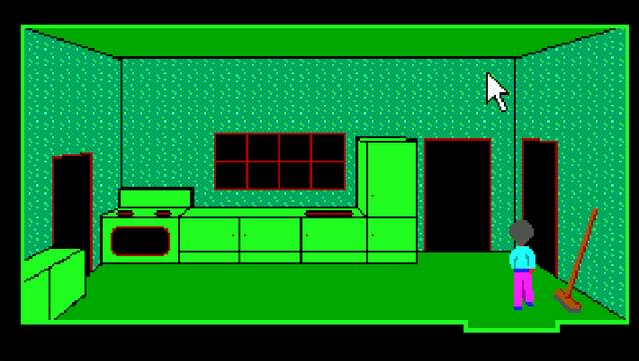
Take Hugo through an animated 'classic' style adventure, solving puzzles, finding hidden objects and outwitting the maniac hosts of the haunted house to rescue Hugo's sweetheart Penelope. Use the intuitive point & click mouse interface to move around and get Hugo to do your bidding. Most of the essential features of Google's PICASA Mac Application have been carefully evaluated, redesigned and crafted into our beautiful HUGO product. HUGO is Built for Speed & Productivity Hugo is built for keyboard lovers who demand speed and productivity in their daily work. Hugo 2.0 for Mac can be downloaded from our website for free. Our antivirus scan shows that this Mac download is safe. This free software for Mac OS X is a product of LuxDay Global, LLC. The program lies within Design & Photo Tools, more precisely Viewers & Editors.
Search for and purchase books from a variety of categories and genres from the Book Store.
Browse books on your iPhone, iPad, and iPod touch
- Open the Books app and tap Book Store at the bottom of the screen.
- Browse the top charts or books recommended for you. Or tap Browse Sections to see book store sections like Coming Soon or genres like Young Adult or Nonfiction. You can also tap the Search tab to search for specific titles, authors, narrators, and more.
- Tap a book. You can tap Sample to read a preview of the book, or tap Want to Read to add it to your Want to Read list in the Reading Now tab.
Note: Mac Explorer is no longer under development, and it is no longer available for sale. Mac Explorer is a file browser and management tool that brings a hierarchal navigation system to the Mac. The first ever Mac OS X file browser to offer tabbed file browsing, Thumbnail previews of pictures files and filter based file browser, Mac Explorer offers a totally new and unique file browsing. Apr 12, 2021 Hugo sees mob maestro Martin Scorsese stepping away from the mafia and into a coming-of-age tale of whimsy. The film takes place in early 1930s Paris and follows Hugo Cabret (Asa Butterfield), the.
You can tap Buy and confirm the purchase of your book. All of your books, book series, PDFs, and audiobooks that you've purchased from the Book Store or Audiobook Store or manually added to your device appear under the Library tab.
Browse books on your Mac
- Open the Books app and click Book Store at the top of the window.
- In the sidebar, click Top Charts, The New York Times, or Top Authors to browse for books. Or click Categories to see genres like Comics & Graphic Novels, History, or Mysteries & Thrillers. You can also use the Search option in the upper-right corner.
- Click a book. Then you can click Get Sample to read a preview of the book before buying.
You can click Buy and confirm the purchase of your book. All of your books, book series, PDFs, and audiobooks that you've purchased from the Book Store or Audiobook Store or manually added to your Mac appear in your Library tab under the All Books tab in the sidebar .
Read books
Tap or double-click a book to open it and start reading. If you close the book, Apple Books saves your place for you. Controls are available to customize your reading experience and annotate passages. You can also search for a specific word or page number and create bookmarks to view later.
Control your reading on your iPhone, iPad, or iPod touch
Tap the center of your screen on your iPhone, iPad, and iPod touch to open and close the controls while reading. You can tap the Table of Contents button to skip to a different chapter or section, see bookmarks you've added, and view highlights and notes you've made.
Learn how to adjust font sizes and brightness, take notes, and create bookmarks.
Control your reading on your Mac
To view the controls when you're reading on your Mac, move your pointer to the top of the book. You can click the Table of Contents button to skip to a different chapter or section. To skip to a bookmarked page, click the the down arrow next to the Bookmark button .
Learn how to highlight and take notes or change a book's appearance.
Manage your library
Organize the books in your library, and download a book to read offline. If you need to remove any downloaded items, you can delete books and audiobooks from your devices.
Download books on your iPhone, iPad, or iPod touch
- Find the item in your library. Don't see the book that you want?
- Tap the book to open it and download it automatically. You can also tap the More button below the book and choose Download.
- If the book is part of a series, first tap to open the series, then tap the download button under the book that you want.
Organize your library on your iPhone, iPad, or iPod touch
- Tap Library.
- Under Collections, tap the word next to Sort. If you don't see Sort, swipe down on your screen to have the option appear.
- From the menu that appears, choose Recent, Title, Author, or Manually. You can also sort other collections. For example, go to Collections > Audiobooks to sort your audiobooks by author.
Click the List View button to view your books as a list instead of a grid.
Download books on your Mac
- Find the item in your library. Don't see the book that you want?
- Click the cloud icon in the upper-right corner. If you don't see the cloud icon, the book is already downloaded to your device.
- If the book is part of a series, first double-click to open the series, then click the cloud icon on the book that you want to download.
Organize your library on your Mac
Hugo Explores Mac Os Download
- Click All Books in the left sidebar.
- Click Sort By in the upper-right corner.
- Choose Most Recent, Title, or Sort Manually.
Click the List View button to view your books as a list instead of a grid.
If you don't see a book
If you don't see a book that you purchased from the Book Store in your library, here are some things you can try.
Update your device
Make sure that you're using the latest version of iOS or iPadOS on your iPhone, iPad, and iPod touch, or the latest version of macOS on your Mac.
Turn on iCloud on your iPhone, iPad, or iPod touch
- Open the Settings app.
- Tap [your name] > iCloud
- Turn on both iCloud Drive and Books.
- Then go to Settings > Books. Under Syncing, turn on iCloud Drive.
Download all of your books on your Mac
- Click the Book Store tab at the top of the window.
- In the sidebar, click Featured.
- Under Quick Links, click Purchased.
- Click the Download All button in the lower-right corner.
Redownload or unhide your books
Redownload books to add books that you previously deleted back to your library.
Unhide books if you previously hid those purchases.
Discover more ways to read
- You can listen to audiobooks in the Books app on your iPhone, iPad, iPod touch, or Mac. Or use iTunes on a PC.
- Read storybooks aloud with iBooks Storytime on Apple TV.
- You can save copies of PDFs from emails and webpages into the Books app.
- You can also add DRM-free EPUB file format books, iBooks Author books, books that you create with Pages, MP3 audiobooks, AAC audiobooks, and Audible.com audiobooks to your library.
Here’s how I get productive for JavaScript/Node on Mac OS.
It includes iTerm2, zsh, Node, Visual Studio Code and some git commands.
Table of Contents
Setup iTerm2
- Install iTerm2
Change edit mode to natural text
- iTerm Preferences → Profiles → select your profile → Keys tab → Load Preset… → Natural Text Editing (See this StackOverflow answer)
New session should start where previous left off
- iTerm Preferences → Profiles → select your profile → General tab → Working Directory section → Reuse previous session’s directory option
Quit on tab close
- iTerm Preferences → General, “Closing” → “Quit when all windows are closed”
Increase font size
- iTerm Preferences → Profiles → select your profile → Text tab → Font section → Change font → Update font in the popup
- Fan of 16pt Monaco (12, 14 is just too small)
Enable infinite history
- iTerm Preferences → Profiles → select your profile → Terminal tab → Unlimited scrollback
Shell setup
Hugo Explorer Mac Os Catalina
zsh
With oh-my-zsh manager. Sets you up with auto-completion.
Mac Os Catalina
snazzy colour theme
Using iterm-snazzy, which is a case of downloading the .itermcolors file and choosing the theme from (iTerm Preferences → Profile > Colors > Color Presets…).
Pure prompt
It’s simple, clean but gives you enough information to be productive.
(see Setup and configuration for how to get Node/npm up and running)
- Install using npm:
npm install --global pure-prompt - Initialise by adding the following to your
.zshrc:
As a developer it’s always good to have a few browsers and tools handy:
- Google Chrome: still a goto due to its solid and extensive dev tools. Usually I install the React or Vue dev tools.
- Postman for Mac: to manually test APIs
- Firefox: number 2 browser
- Brave: auto-blocks ads and tracking, sort of the “play” browser, its dev tools are a buggier/less ergonomic version of Chrome dev tools (this is because Brave uses Chromium under the hood)
- Safari - installed by default on Mac OSX, it’s a buggy browser, good to test using it since it surfaces weird SVG and cookies security policy quirks. Since it’s the default it’s also widely used by non-technical people.
- Enable the dev tools: Safari → Preferences → Advanced → Show develop menu in menu bar.
I use Visual Studio Code, it strikes the right balance between usable out of the box and customisable. The way I see it editors like vim or Atom need a bit of config before being productive, and others like Sublime or IDEs (WebStorm) don’t have the same plugin ecosystem.
Install VSCode command line tools
Open the dialog using CMD + P.
Use: Shell Command: Install 'code' command in PATH
The VSCode command line tool usage examples:
code .: open.directory in VSCodecode -r .: replace directory opened in VSCode with the current directorycode -a .: add current directory to VSCode, ie. initialises a workspace
Must-have extensions
- Atom keymap: I’m not a fan of the default keybindings, this uses Atom-style ones, get it from the Visual Studio Marketplace or
ext install atom-keybindingsfromCMD + Pmenu - EditorConfig for VS Code: “EditorConfig helps developers define and maintain consistent coding styles between different editors and IDEs.” (see editorconfig.org), ie. helps you deal with tab size, trimming spaces etc. across code editors, get it here from the Visual Studio Marketplace or
ext install EditorConfigfromCMD + Pmenu
Nice to have extensions
- ESLint: “Integrates ESLint JavaScript into VS Code.”, get it from the Visual Studio Marketplace or
ext install vscode-eslintfromCMD + Pmenu - npm Intellisense: “autocomplete npm modules in import statements”, get it from the Visual Studio Marketplace or
ext install npm-intellisensefromCMD + Pmenu - Snazzy theme: same colour theme (snazzy) as I’ve got setup for the terminal for VSCode, get it from the Visual Studio Marketplace or
ext install snazzy theme - Import Cost: “Display import/require package size in the editor”, get it from the Visual Studio Marketplace, or
ext install import-cost
Hugo Explorer Mac Os 11
Not many productivity apps, just Alfred, which I use as a better Spotlight Search and Clipy which is a clipboard manager.
Maccy
A simple clipboard manager designed for OSX.
It works out of the box better than Clipy (see below).
Install it through Homebrew:
Update the preferred hotkey to CMD + shift + v:
Paste by default on selection of a clipboard item:
Superseded by Maccy Clipy
Bump up the number of “inline items” (Clipy → Preferences → Menu → Number of items place inline).
Set your screenshots to save to clipboard + enable the option to paste as plain text (Clipy → Preferences → Beta → Paste as PlainText + Save screenshots in history).
Update Xcode using xcode-select--``install.
Install Homebrew for package managements (think apt or pkg for Mac):
Install Node.js either from source, using the Mac installer or using Homebrew:
Install n – Interactively Manage Your Node.js Versions using npm (now that we have Node installed):npm install--``global n
Switch to latest Node version using n:sudo n latest
Install jq (format and deal with JSON nicely in the terminal) and watch (run a command repeatedly) using Homebrew
Add a few git extensions:
- git-open: “Type
git opento open the GitHub page or website for a repository in your browser.” usingnpm install --global git-open - git-standup: “Recall what you did on the last working day.” using
git standup, there are multiple install options (see git-standup#install), I usually go with:brew install git-standup - git-lg: simpler/prettier
git log:
Add the following minimal .vimrc, which enables syntax highlighting, has basic tab/tabsize configuration and enables line numbers display:

Set up SSH keys and add to VCS hosting, see this GitHub help article:
- Generate a new key:
ssh-keygen -t rsa -b 4096 -C '*[email protected]*' - Copy your public key to clipboard so you can paste it wherever your hosted Version Control system asks you to:
pbcopy < ~/.ssh/id_rsa.pub
Put percentage on power level, right-click the battery indicator and select “Show Percentage”.
❤️ Spotify
More at my /uses page.
(Optional) Docker, VirtualBox
Hugo Explorer Mac Os Download
Docker is a containerisation technology, think VMs but smaller. I recommend Docker for Mac.VirtualBox allows you to run Virtual Machines on Mac, install it at VirtualBox downloads.
Get The Jest Handbook (100 pages)
Take your JavaScript testing to the next level by learning the ins and outs of Jest, the top JavaScript testing library.
orJoin 1000s of developers learning about Enterprise-grade Node.js & JavaScript